
 By Biltz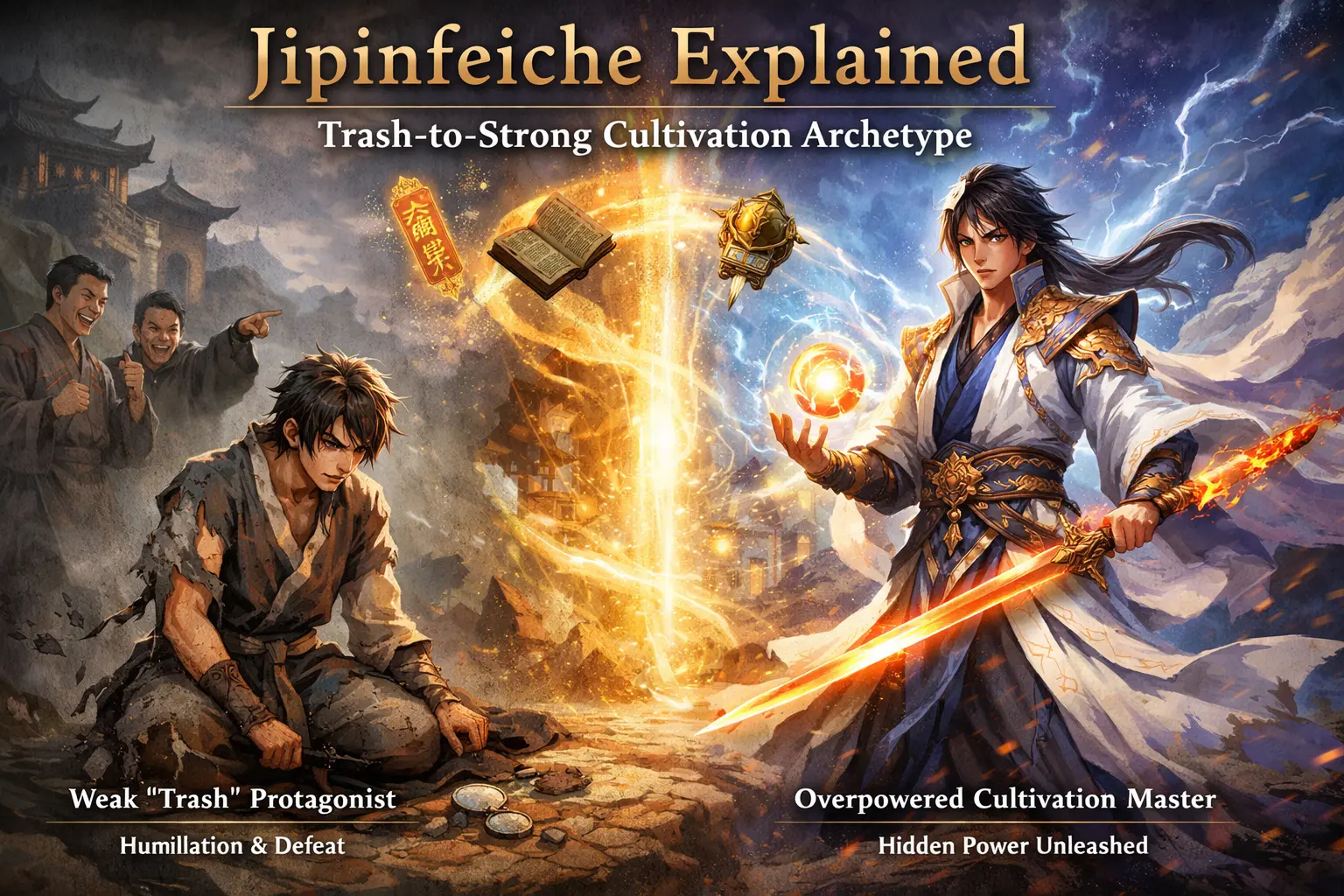
Introduction: Why “Jipinfeiche” Matters in Modern Web Fiction
In Chinese web novels, readers often encounter extreme character archetypes that evolve from failure to dominance. One such concept is “jipinfeiche”, commonly understood as a variation of “极品废柴”, which translates loosely to an “ultimate useless person” or “top-tier trash talent.”
At first glance, it sounds negative, but in storytelling, it represents something far more powerful: the foundation of the underdog transformation fantasy. This trope drives millions of cultivation, wuxia, and xianxia stories where a weak protagonist rises to god-like strength through persistence, opportunity, or hidden power.
In simple terms, jipinfeiche refers to a character who starts with zero talent, faces humiliation, and later transforms into an exceptionally powerful figure through cultivation progression, system upgrades, or reincarnation mechanics.
This article breaks down the meaning, narrative structure, psychological appeal, and complete ecosystem behind this archetype so you can fully understand why it dominates Chinese fantasy storytelling.
What Does Jipinfeiche Mean?
In most interpretations, jipinfeiche (极品废柴) combines two ideas:
- 极品 (jipin) → “extreme,” “ultimate,” or “top-grade”
- 废柴 (feiche) → “trash,” “useless person,” or “failure”
Featured Definition
Jipinfeiche refers to a cultivation fiction archetype where the protagonist starts as an extremely weak, talentless, or humiliated individual. Despite this, they later unlock hidden potential, receive external systems, or undergo transformation, evolving into a powerful figure within a structured cultivation world.
This term is not just a description of weakness. It is a narrative engine that sets up contrast, emotional payoff, and long-term character evolution.
Origins in Xianxia and Wuxia Fiction
The concept of jipinfeiche is deeply tied to the evolution of xianxia and wuxia storytelling traditions.
Wuxia Influence
Traditional wuxia stories focused on martial arts heroes, honor codes, and sect rivalries. Characters often started average but trained through discipline rather than sudden power spikes.
Xianxia Evolution
Xianxia introduced supernatural cultivation systems involving:
- Qi energy cultivation
- Dantian development
- Realm breakthroughs
- Immortality pursuit
As the genre evolved, authors began exaggerating character contrast. This led to the rise of the “trash-to-powerhouse” narrative structure, where protagonists begin extremely weak—sometimes even disabled or expelled from their sect.
Core Structure of the Jipinfeiche Narrative
Most jipinfeiche-based stories follow a predictable but highly effective emotional pattern.
1. Weak Introduction Phase
The protagonist is introduced as:
- Talentless or blocked in cultivation
- Rejected by family or sect
- Considered useless or inferior
This phase builds audience empathy.
Also read : SMS-Man for OTP Verification
2. Humiliation and Pressure Arc
The character experiences:
- Public shame or defeat
- Ranking tests or talent assessments
- Betrayal from peers or mentors
This is where the “face-slapping” expectation begins forming in the reader’s mind.
3. Trigger Event (Transformation Point)
This is the turning point:
- System activation
- Reincarnation into a new body
- Awakening hidden bloodline
- Discovery of ancient artifact
This is where the story shifts from despair to opportunity.
4. Growth and Cultivation Progression
The protagonist begins climbing structured power systems:
- Qi refinement
- Core formation
- Nascent soul development
- Higher realm breakthroughs
This stage is heavily tied to cultivation novel hierarchy systems and progression mechanics.
Also help : Flujo TV Review & Setup Guide
5. Revenge and Face-Slapping Phase
The protagonist returns to:
- Defeat previous bullied Overturn social hierarchy
- Establish dominance in sect or world
This is one of the most emotionally satisfying loops in the genre.
Cultivation Systems Behind Jipinfeiche Stories
To understand this archetype fully, you must understand the underlying world systems.
Qi and Dantian Structure
Most cultivation stories rely on:
- Qi as internal energy
- Dantian as energy core storage
- Meridians as energy pathways
A damaged or blocked dantian is often the reason the protagonist is labeled “trash.”
Realm Progression System
Power scaling usually follows structured stages such as:
- Body Refinement
- Qi Condensation
- Core Formation
- Nascent Soul
- Ascension-level states
This structured system allows gradual, trackable growth that keeps readers engaged.
Sect Hierarchy Systems
Cultivation societies are divided into:
- Outer disciples
- Inner disciples
- Core disciples
- Elders and masters
The jipinfeiche character usually starts at the bottom and climbs upward.
Why the Jipinfeiche Trope Is So Popular
The popularity of this archetype is not random. It is deeply tied to reader psychology.
1. Emotional Reward Loop
Readers experience satisfaction through contrast:
- Weakness → growth → dominance
This creates a dopamine-driven engagement cycle.
2. Underdog Identification
Many readers connect with:
- Being underestimated
- Facing unfair judgment
- Wanting recognition
The protagonist becomes a symbolic success fantasy.
3. “Face-Slapping” Satisfaction
A defining feature is the revenge payoff:
- Bullies get humbled
- Power hierarchy reverses
- Justice is emotionally restored
This is one of the strongest retention drivers in web fiction.
4. System-Based Addiction Design
Modern novels often include:
- Level-up notifications
- Reward systems
- Skill acquisition prompts
These resemble game mechanics, making stories highly addictive.
Common Tropes Connected to Jipinfeiche
Reincarnation into Weak Body
The protagonist is reborn into:
- A disabled body
- A rejected heir
- A failed disciple
This resets their starting point.
Hidden Genius or Sealed Power
Often the character is:
- Misjudged due to a seal or restriction
- Secretly from a powerful lineage
- Destined for greatness
System Upgrade Mechanics
A “system” provides:
- Missions
- Rewards
- Instant skill upgrades
This accelerates growth beyond normal limits.
Academy or Sect Humiliation Arc
A recurring setup where:
- Talent tests define worth
- Protagonist is publicly ridiculed
- Future revenge is foreshadowed
Psychological Appeal Behind the Archetype
The deeper appeal of jipinfeiche stories lies in structured emotional engineering.
Narrative Engineering of Growth
The human brain responds strongly to:
- Clear progress indicators
- Overcoming obstacles
- Gradual improvement
Cultivation novels amplify this through visible power levels.
Why Weak Starts Are Important
Starting weak is not a flaw—it is a design choice:
- Creates tension
- Establishes contrast
- Maximizes payoff later
Without weakness, transformation loses meaning.
Reader Retention Mechanics
Long web novels (often 1000+ chapters) maintain engagement through:
- Continuous upgrades
- New realms
- New enemies
- Escalating stakes
Variations of the Jipinfeiche Archetype
1. System Novel Variant
The protagonist receives an external system that controls progression.
2. Reincarnation Variant
The protagonist retains memories from a past life.
3. Hidden Bloodline Variant
Power is unlocked through heritage awakening.
4. Genius in Disguise Variant
The protagonist was never truly weak, only suppressed.
Each variation still follows the same core emotional structure.
Differences Between Xianxia, Wuxia, and System Novels
| Genre | Focus | Role of Jipinfeiche |
|---|---|---|
| Wuxia | Martial arts realism | Rare, minimal exaggeration |
| Xianxia | Immortal cultivation | Core narrative structure |
| System novels | Game-like progression | Accelerated transformation |
Why This Archetype Dominates Modern Web Fiction
The dominance of jipinfeiche-style storytelling is driven by:
- Simple emotional structure
- High engagement loops
- Scalable worldbuilding
- Easy chapter-based expansion
- Strong reader immersion
It is especially effective in serialized online platforms where retention matters more than complexity.
Advanced Insight: The Hidden Structure of Cultivation Stories
At a deeper level, jipinfeiche narratives follow a predictable algorithm:
- Establish weakness
- Introduce unfair system
- Trigger transformation event
- Accelerate growth curve
- Introduce higher-level conflict
- Repeat cycle at larger scale
This repetition ensures long-term narrative sustainability.
Frequently Asked Questions
What is jipinfeiche in simple terms?
It refers to a “trash-to-strong” character archetype in Chinese cultivation fiction where a weak protagonist becomes extremely powerful over time.
Is jipinfeiche a genre or a character type?
It is not a genre. It is a character archetype and narrative structure used across xianxia and system-based novels.
Why do cultivation novels always start with weak protagonists?
Because starting weak creates emotional contrast, making later success more satisfying for readers.
What is the role of systems in these stories?
Systems act as structured progression tools that accelerate character growth and increase engagement.
Why is the face-slapping trope so common?
It provides emotional payoff by reversing humiliation and restoring narrative justice.
Conclusion: The True Meaning of Jipinfeiche
At its core, jipinfeiche is not about weakness—it is about transformation. It represents one of the most powerful storytelling engines in modern Chinese web fiction, combining structured progression, emotional contrast, and psychological satisfaction.