
 By Biltz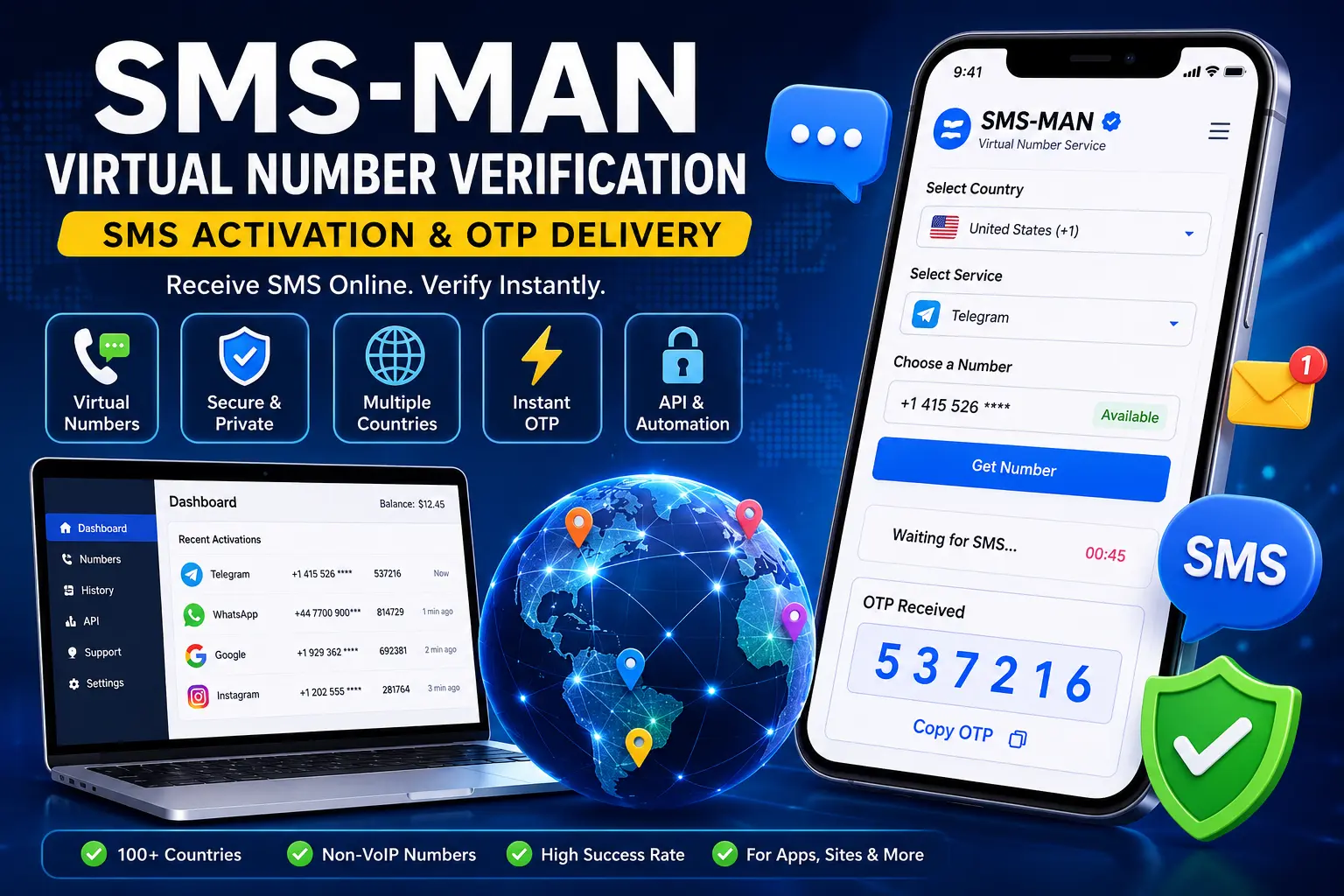
In today’s digital world, creating an online account almost always requires phone verification. Whether you’re registering for a social media platform, joining a marketplace, testing an application, or securing access with two-factor authentication, a verification code is often the final step before account activation.
This growing demand has led to the rise of SMS activation platforms such as SMS-Man. These services provide virtual numbers that can receive SMS verification codes, allowing users to complete registration processes without relying on a personal mobile number.
This guide explains what SMS-Man is, how it works, where it fits within the modern verification ecosystem, and the factors that influence SMS delivery, account verification success, privacy, and security.
What Is SMS-Man?
SMS-Man is an SMS verification platform that provides temporary phone numbers, rental numbers, and virtual mobile identities capable of receiving one-time passwords (OTPs) and verification codes from online services.
In simple terms, it acts as an intermediary between online platforms that require phone verification and users who need access to a virtual number for account activation.
Definition
A virtual number verification service is a platform that allows users to obtain a temporary or long-term phone number capable of receiving SMS messages used for identity confirmation, registration verification, and account onboarding verification.
Unlike a traditional SIM card tied to a personal device, a virtual number exists digitally and can often be accessed through a web interface or API.
Also read : How to Avoid Risk Payment in Facebook Ads
How SMS Activation Platforms Work
Understanding the process helps explain why some activations succeed instantly while others encounter delays.
The Basic Workflow
- A user selects a country and service.
- The platform assigns an activation-ready phone number.
- The user enters that number during registration.
- The target platform sends an OTP verification code.
- The SMS is routed through telecom networks.
- The virtual number receives the message.
- The user retrieves the code and completes verification.
This process is commonly known as SMS activation.
The Role of OTP Verification
An OTP, or one-time password, is a temporary security code used to confirm ownership of a phone number. OTP verification systems have become standard for:
- Social media verification
- Messaging app activation
- Marketplace account creation
- Gaming account verification
- E-commerce account setup
- Account recovery
- Multi-factor authentication
The popularity of OTP-based authentication has created demand for temporary mobile authentication solutions and online SIM activation services.
Also read : Best AI Video Creation Tools of 2026
Types of Numbers Available
Not all virtual numbers are designed for the same purpose.
Temporary Verification Numbers
These numbers are intended for one-time use.
They are commonly used for:
- App registration verification
- Single account activation
- Short-term testing
- Disposable SMS reception
Once the verification code is received, the number may no longer be available.
Rental Numbers
Rental numbers remain active for a longer period.
Users often choose them when:
- Ongoing SMS access is required
- Multiple verification codes are expected
- Long-term account management is necessary
Long-Term Virtual Numbers
These numbers function similarly to secondary phone numbers and may support recurring SMS forwarding solutions or repeated authentication requests.
Country-Specific Numbers
Many verification platforms maintain a virtual number inventory covering multiple regions.
Examples include:
| Region | Common Use Cases |
|---|---|
| USA | E-commerce, social media |
| UK | Business registration |
| Canada | Marketplace verification |
| Europe | Regional app activation |
| Asia | Messaging applications |
Multi-country virtual numbers allow users to select the region most compatible with a particular service.
Common Use Cases for SMS-Man
The usefulness of SMS activation extends beyond simple account creation.
Social Media Verification
Platforms such as Instagram, Facebook, TikTok, X, and Reddit often require phone verification to reduce spam and improve account authenticity.
Messaging Applications
Messaging services frequently rely on SMS verification to establish a unique mobile identity.
Examples include:
- Telegram
- Discord
E-Commerce and Marketplaces
Online stores and marketplace platforms use verification codes to:
- Confirm user identity
- Reduce fraudulent registrations
- Improve trust signals
Gaming Platforms
Gaming services often require account activation numbers during registration or account recovery procedures.
Developer Testing
Developers and QA teams frequently need virtual verification environments to test:
- Registration flows
- SMS delivery mechanisms
- Verification success scenarios
- User onboarding systems
SMS-Man and API Automation
Beyond manual activation, many verification platforms offer developer access through APIs.
What Is an SMS Activation API?
An SMS activation API is a programmatic interface that allows software applications to request virtual numbers, retrieve verification codes, and automate account testing.
Common API components include:
- API token authentication
- REST API requests
- JSON responses
- Verification endpoints
- Activation status tracking
Typical Automation Workflow
- Application requests a number.
- Platform allocates an available number.
- External service sends OTP.
- API retrieves SMS content.
- System automatically processes verification.
For developers, this simplifies large-scale testing and verification automation.
Factors That Affect Verification Success
Many users assume that SMS delivery is instant and guaranteed. In reality, several technical variables influence the outcome.
Carrier Compatibility
Every mobile network operator applies different policies.
Some carriers:
- Accept verification traffic freely
- Restrict disposable numbers
- Filter suspicious traffic
- Block known verification platforms
Carrier compatibility is one of the most important verification success factors.
Number Reputation Score
Although rarely discussed, virtual number reputation plays a major role.
A number that has been used repeatedly may accumulate signals that affect acceptance rates.
Some systems evaluate:
- Registration frequency
- Previous account activity
- Historical abuse patterns
- Geographic consistency
This contributes to what can be described as a virtual number reputation score.
Number Recycling Risks
Virtual numbers are often recycled after periods of inactivity.
Potential concerns include:
- Receiving messages intended for previous users
- Reduced trust scores
- Registration conflicts
Understanding number recycling risks helps users make informed decisions.
Regional Acceptance Patterns
Verification success rates vary by country.
Certain services may:
- Prefer local numbers
- Reject specific regions
- Prioritize carrier-issued numbers
- Limit registrations from high-risk locations
These regional OTP acceptance patterns influence activation outcomes.
Why Some OTP Codes Never Arrive
One of the most common questions users ask is: Why is my OTP not arriving?
Several factors may contribute.
Carrier-Level SMS Filtering
Telecom providers routinely filter messages that appear suspicious.
Carrier-level SMS filtering may affect:
- High-volume verification traffic
- Disposable number detection systems
- Automated registration activity
Telecom Routing Issues
SMS delivery depends on complex routing infrastructure.
Problems may occur because of:
- Network congestion
- Gateway failures
- Routing delays
- International delivery bottlenecks
Telecom routing impact on verification is often overlooked but highly significant.
Verification Blacklist Indicators
Many online platforms maintain internal databases that identify suspicious behavior.
Potential triggers include:
- Excessive registrations
- Repeated failed activations
- Known disposable number usage
- Abuse detection systems
These verification blacklist indicators can reduce activation success.
Security and Privacy Considerations
Virtual numbers offer convenience, but users should understand both benefits and limitations.
Privacy Advantages
Many individuals prefer not to expose personal phone numbers during registration.
A secondary phone number service can help:
- Reduce unwanted contact
- Separate personal and online identities
- Improve privacy during registration
Security Limitations
A virtual number should not automatically be considered a replacement for strong security practices.
Users should still:
- Enable two-factor authentication
- Protect account credentials
- Monitor suspicious activity
- Use trusted verification platforms
Fraud Prevention Systems
Modern platforms rely on sophisticated anti-abuse verification systems.
These systems analyze:
- Device fingerprints
- IP patterns
- Behavioral signals
- Verification history
The goal is to prevent fraud while maintaining legitimate access.
Understanding Number Quality Metrics
A topic many competitors ignore is number quality assessment.
Not all numbers perform equally.
Important Quality Signals
- Verification success rate
- Carrier trust scoring
- SMS delivery reliability
- Activation inventory management
- Number pool quality metrics
- Account acceptance rates
High-quality virtual number pools generally produce more consistent results.
Verification Success Benchmarking
Organizations often measure:
- Delivery speed
- OTP acceptance rate
- Country performance
- Carrier compatibility
- Platform-specific outcomes
Verification success benchmarking helps identify the most reliable activation environments.
SMS-Man Alternatives and Industry Comparison
Several providers operate within the SMS activation marketplace.
Common alternatives include:
- SMS-Activate
- 5SIM
- OnlineSIM
- Tiger SMS
- TextNow
- Receive-SMS
Developers may also explore communication platforms such as:
- Twilio
- Telnyx
- Plivo
Each platform differs in:
- Number availability
- Geographic coverage
- API functionality
- Pricing models
- Verification success performance
The best choice often depends on the specific application and target region.
Advanced Concepts Most Guides Miss
Disposable Number Detection Algorithms
Many online services actively detect temporary numbers.
Detection methods may analyze:
- Usage patterns
- Carrier data
- Number age
- Registration frequency
These disposable number detection algorithms continue evolving as platforms strengthen security.
Account Trust Signals
Phone verification is only one trust factor.
Platforms may also evaluate:
- Device consistency
- Login behavior
- Geographic stability
- User activity patterns
These account trust signals influence long-term account credibility.
Verification Throughput Optimization
Large organizations focus on verification throughput optimization.
This includes:
- Reducing delivery delays
- Improving routing efficiency
- Managing activation inventory
- Monitoring carrier performance
Such improvements directly affect user experience.
OTP Delivery Latency
OTP delivery latency refers to the time between sending and receiving a verification code.
Factors affecting latency include:
- Carrier routing
- Geographic distance
- Network congestion
- Gateway processing
Understanding latency helps diagnose activation issues more effectively.
Frequently Asked Questions
Is SMS-Man safe for account verification?
Virtual number platforms can provide an additional layer of privacy during registration. However, users should understand the platform’s policies, security practices, and number management processes before using any service.
How long do virtual numbers remain active?
The answer depends on the number type. Temporary activation numbers may be available for a single verification session, while rental numbers and long-term virtual numbers remain active for extended periods.
Can virtual numbers receive OTP codes?
Yes. OTP receiving services are specifically designed to accept verification messages and display them to users through a web interface or API.
Why are some virtual numbers blocked?
Certain platforms use anti-abuse verification systems and disposable number detection technologies. Numbers with poor reputation scores or high historical usage may face restrictions.
Which country offers the highest verification success rate?
There is no universal answer. Verification success depends on carrier compatibility, platform policies, routing quality, and regional acceptance patterns.
Key Takeaways
SMS-Man operates within a broader ecosystem of SMS verification platforms that provide virtual numbers for account activation, OTP delivery, and identity verification. Understanding how temporary numbers, rental numbers, carrier networks, telecom routing, and verification systems interact is essential for achieving consistent results.
The most important factors influencing success are number quality, carrier compatibility, regional acceptance patterns, delivery reliability, and fraud prevention mechanisms. Users who understand these variables can make more informed decisions, troubleshoot activation failures effectively, and navigate the increasingly complex world of digital phone verification with greater confidence.