 By sl lives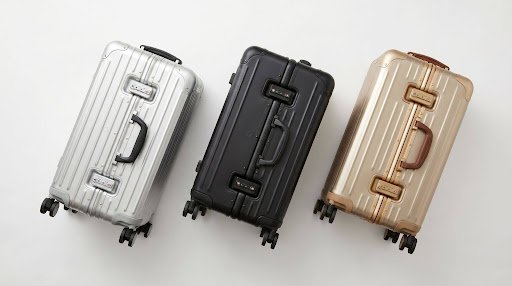
Building a luggage brand does not require designing a suitcase from scratch. Most successful luggage brands — at every price tier — start by working with existing factory tooling, applying their own brand identity to a proven shell design, and focusing their resources on positioning, distribution, and customer acquisition rather than product development.
This approach is called private label manufacturing, and it is the most capital-efficient path to market for new luggage brands.
What Private Label Actually Means in Luggage
Private label luggage means working with a factory’s existing shell design and customizing the elements that carry your brand: color, finish, hardware, logo placement, interior lining, and packaging. The structural geometry is already in production. The molds exist. The production parameters are established.
What you are buying is not the design — you are buying the manufacturing relationship, the quality consistency, and the ability to put your brand on a product that has already been validated in production runs.
The right private label luggage manufacturer will offer color splitting across multiple SKUs at the minimum order threshold — allowing new brands to test market response without overcommitting to a single colorway. A 300-piece MOQ divided across three colors is a market test. A 300-piece MOQ in a single color is an inventory bet.
What Can Actually Be Customized
The customization scope in a private label program varies by factory and by how much you are willing to pay for tooling modifications. At the baseline level, you can change: shell color and finish, hardware color and style (wheels, handles, zippers, latches), interior lining color and layout, logo placement, and outer packaging.
With modest tooling investment, you can modify corner guards, add branded embossing, change handle grip materials, or introduce a signature interior print. Full structural redesign — new shell geometry — moves you from private label into custom OEM territory, with the corresponding tooling cost and lead time implications.
MOQ and the First Order Structure
First-order MOQ in a private label program reflects the factory’s production economics, not an arbitrary threshold. Understanding the cost logic behind the number helps buyers negotiate intelligently.
A credible wholesale luggage supplier or private label program structures MOQ around total order quantity rather than per-color minimums. The distinction matters: a factory requiring 300 pieces per color forces a three-color launch to 900 units. A factory supporting total-order MOQ reaches the same 300-piece threshold across three colors at 100 units each.
Common Mistakes in the First Private Label Order
The most frequent errors: accepting vague quotations that do not specify material grade or hardware sourcing; skipping written sample approval documentation; not confirming mold ownership terms before paying a tooling deposit; and underestimating the gap between sample lead time and bulk production lead time.
Each of these errors is recoverable on a first order. On a reorder, when you are working against a live inventory position and customer delivery commitments, they become significantly more expensive.