
 By Alex John
 The Food Culture Behind the Beautiful Game
Football Club Menu , There’s something about matchday that makes even the most basic food taste incredible. Maybe it’s the cold air, the roar of the crowd, or the pure excitement of being there live. Whatever it is, the football club menu has become a huge part of the experience — not just an afterthought between the turnstile and your seat.
Over the last decade, stadium food has gone through a quiet revolution. Clubs are no longer satisfied with handing you a lukewarm pasty in a paper bag. Today, a visit to the ground can mean wood-fired pizza, craft beer, loaded fries, or even a three-course pre-match dining experience in a hospitality suite. The football club menu now says as much about a club’s identity as its badge or its colours.
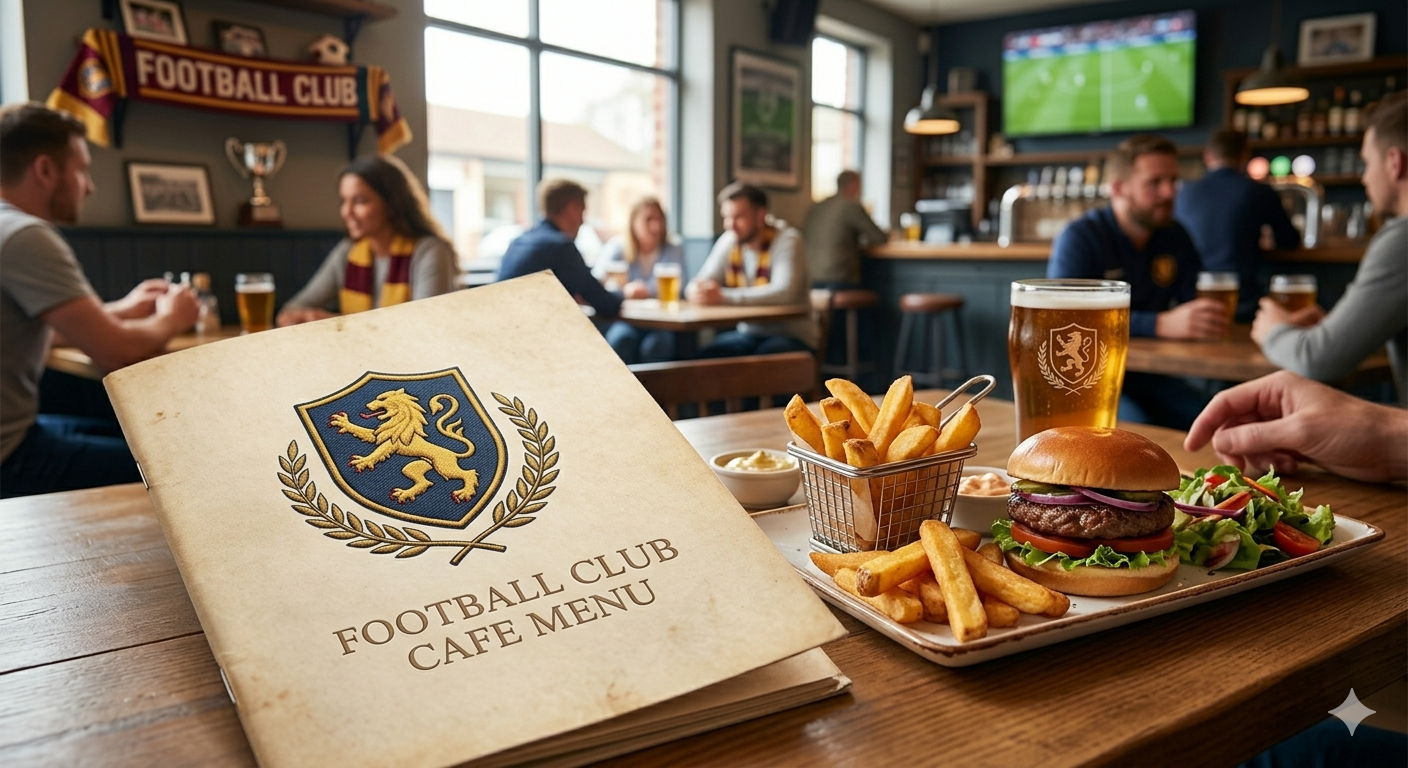
The Classic Matchday Menu — Why It Still Matters
Before we get into the modern upgrades, let’s talk about the staples. The classic football ground menu has been built on a few pillars that fans across the world recognise instantly.
The Pie. In British football especially, the matchday pie is sacred. Steak and kidney, chicken balti, minced beef — these aren’t just food options, they’re traditions. Clubs like Wigan Athletic have actually won awards for their pies, and plenty of fans plan their arrival around getting one before kick-off.
Hot Dogs and Burgers. Simple, filling, and fast to serve a crowd. The humble hot dog has fed millions of supporters across stadiums in England, Germany, Spain, and beyond. It’s not fancy, but it works.
Bovril and Hot Drinks. On a cold Tuesday night in November, a cup of Bovril (beef broth) is practically a religious experience for football fans in the UK. Tea and coffee are standard everywhere, but Bovril is uniquely tied to terrace culture.
These classics survive because they’re practical. Clubs need to serve tens of thousands of people in a 45-minute window at half-time. Speed, warmth, and portion size matter enormously.
How the Modern Football Club Menu Has Changed
Modern fans want more, and clubs have responded. The shift started gradually, driven partly by rising food culture expectations and partly by the need to increase matchday revenue. Hospitality and premium dining now represent serious income for clubs at every level.
Walk around a Premier League ground today and you might find:
- Street food stalls featuring global cuisines — Korean BBQ, Mexican tacos, Indian curries
- Craft beer taps from local breweries replacing mass-produced lager
- Vegan and plant-based options including burgers, wraps, and loaded fries that rival any meat dish
- Artisan coffee carts for the supporter who genuinely can’t go 90 minutes without a flat white
- Club-branded merchandise food items — think limited-edition pies with club crests or matchday specials tied to anniversaries
Clubs like Arsenal, Tottenham Hotspur, and Manchester City have invested heavily in their stadium food offerings. The Tottenham Hotspur Stadium, for example, is widely praised for its food and drink variety, including a microbrewery built directly into the ground.
Pre-Match Dining and Hospitality Packages
For supporters who want more than a quick snack, many clubs now offer full pre-match dining experiences. These hospitality packages typically include a two or three-course meal, access to exclusive lounges, and sometimes a meet-and-greet with club legends.
The food served in these settings is genuinely restaurant quality. Think slow-braised beef, seasonal vegetable risotto, freshly baked bread rolls, and dessert buffets. Wine lists, cocktail menus, and premium spirits are standard.
This side of the football club menu also caters to corporate guests and sponsors, meaning clubs put real effort into the presentation and quality. It’s a far cry from the terrace pie — but both exist for a reason, and both matter to different types of supporters.
Fan Favourites Around the World
Different football cultures have produced wildly different matchday food traditions, and they’re all worth celebrating.
In Germany, stadium food is built around sausages. The Bratwurst served at Bundesliga grounds is genuinely excellent — grilled fresh, served in a crusty roll with mustard. It’s simple, done perfectly, and deeply connected to the matchday atmosphere.
In Spain, bars near the stadium do much of the heavy lifting. Tapas, bocadillos (sandwiches), and cold beer before the match are as much a part of La Liga culture as the football itself. Inside the ground, the food is often simpler, but the pre-match ritual outside is rich.
In South America, street vendors outside stadiums sell empanadas, grilled corn, and local snacks that reflect the city’s food culture. The football ground becomes an extension of the neighbourhood.
In the United States, MLS stadiums have embraced the full American sports arena food experience — nachos, loaded hot dogs, barbecue, and enormous drinks cups. It’s indulgent and unapologetic.
Catering for Every Fan — Dietary Needs on the Modern Menu
One area where football clubs have genuinely improved is inclusivity on the menu. Halal options are now standard at most major grounds, particularly in cities with large Muslim communities. Vegetarian and vegan choices have expanded enormously, and gluten-free options are becoming more common.
This isn’t just good ethics — it’s good business. Every supporter should be able to eat well at a match, regardless of their dietary requirements. Clubs that ignore this lose out on both goodwill and revenue.
Tips for Getting the Most Out of Stadium Food
A few practical things worth knowing before your next matchday visit:
Arrive early. The queues at half-time are brutal. If you want food before kick-off, you’ll have a better selection and shorter wait.
Check the club’s website beforehand. Many clubs now publish their matchday food options in advance, including any special seasonal items.
Explore the whole stadium. The best food stalls are often tucked away from the main concourses. A quick walk around before the match can reveal hidden gems.
Consider the hospitality option for a special occasion. If it’s a birthday, anniversary, or a first match with someone special, the pre-match dining experience can be genuinely memorable.
The Football Club Menu as Part of Club Identity
At its best, a football club’s food offering is a reflection of its community. Local ingredients, regional dishes, partnerships with nearby businesses — these things connect the club to the city it represents. The matchday menu isn’t just feeding people; it’s telling a story.
Whether you’re a pie-and-Bovril traditionalist or someone who orders the kimchi loaded fries, the food you eat at a match becomes part of your memory of the day. That’s something no streaming service can replicate.
The football club menu has never been more varied, more considered, or more worth paying attention to.