
 By Alex John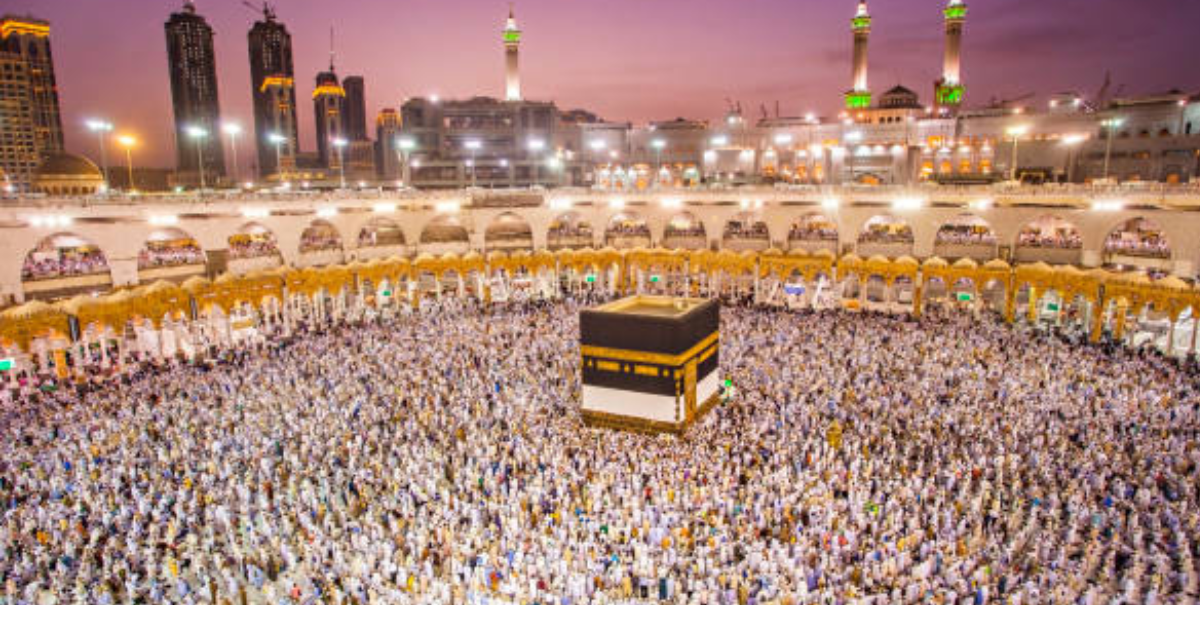
If you’re preparing for Umrah and feeling a little overwhelmed, that’s completely normal. Most people going for the first time say the same thing — there’s so much information coming from so many directions that it gets confusing fast.
So let’s slow it down. This guide walks you through every single step in plain language — what to do, why you’re doing it, what to say, and what to watch out for. No unnecessary complexity. Just clear, honest guidance from start to finish.
Step 1: Prepare at Home Before You Travel
Preparation starts before you even pack your bag.
Take a full Ghusl (ritual bath) before putting on your Ihram garments. Trim your nails. Remove excess body hair. These are Sunnah acts but they matter, you’re entering a sacred state, and the preparation is part of that intention.
For men: Apply perfume to your body if you wish — but not to the Ihram cloth itself. Once Ihram is on, no more perfume until Umrah is complete.
For women: Wear modest clothing that covers the entire body. No stitched niqab or gloves while in Ihram; however, a woman may hang a cloth in front of her face (without it touching her face) if needed.
After Ghusl, you may offer two rak’ahs of Sunnah prayer. Then face the Qibla and make your intention for Umrah in your heart.
Step 2: Put On the Ihram Garments
Men wear two pieces of plain white unstitched cloth:
The Izar — wrapped around the lower body like a sarong
The Rida — draped over the upper body
Men should avoid stitched garments (including underwear), as Ihram requires unstitched clothing. No head covering. It sounds uncomfortable, but most people adjust to it quickly.
Women wear any modest, loose clothing in any color. There is no specific garment. Your regular Islamic modest dress is your Ihram.
Once you’re in Ihram, the following become prohibited:
- Using perfume or scented products
- Cutting or trimming hair or nails
- Men covering their head
- Women covering their faces or wearing gloves
- Men wearing stitched clothing
- Any sexual relations
- Quarreling or losing your temper
- Harming animals or cutting plants
These restrictions keep you focused. They strip away distraction and comfort on purpose. You’re a guest at Allah’s House — this is the dress code for that visit.
Step 3: The Miqat: Making Your Niyyah and Starting Talbiyah
Every direction leading into Makkah has a boundary point called the Miqat. You cannot cross it without being in the state of Ihram. If you’re flying, the pilot or airline will usually announce when you’re approaching. Be dressed and ready before that point.
At the Miqat, make your intention out loud:
“Labbayk Allaahumma bi Umrah”
Then begin the Talbiyah:
“Labbayka Allaahumma labbayk, labbayka laa shareeka laka labbayk. Inna al-hamd wa’l-ni’mata laka wa’l-mulk, laa shareeka lak.”
Men recite this loudly. Women recite softly.
Keep repeating the Talbiyah from this point, on the bus, walking through the hotel, all the way until you begin Tawaf. Stop Talbiyah when you begin Tawaf. Don’t stop. This is your declaration to Allah that you are on your way.
Step 4: Entering Masjid al-Haram
When you reach Masjid al-Haram, make sure you have Wudu. Enter with your right foot first and recite:
“Allahummaftah li abwaba rahmatik”
Walk toward the Kaaba. Many people recommend lowering your gaze as you enter and only raising your eyes when you’re close, so that first sight of the Kaaba hits you fully. This is one of those moments where duas are accepted, so have something ready in your heart, even if words fail you.
When you see it, send Salawat on the Prophet ﷺ, say Allahu Akbar, and make dua. Don’t rush past this moment.
Step 5: Tawaf: Seven Circles Around the Kaaba
Tawaf means circumambulating — walking around the Kaaba seven times, counterclockwise, with the Kaaba always on your left.
Before you begin — men perform Idtiba: Tuck the Rida under your right armpit and pull it up over the left shoulder, leaving the right shoulder bare. Keep this throughout all seven rounds.
Starting point: Walk to the corner of the Hajar al-Aswad (the Black Stone). If you can touch or kiss it, do so. If the crowd is too heavy — and it often is — simply face it, raise your right hand, and say:
“Bismillah, Allahu Akbar”
That gesture is fully valid. Do not push or hurt anyone trying to get to the stone.
During the first three rounds, Men perform Ramal — a brisk, purposeful walk. Chest forward, arms swinging, confident stride. Not a sprint, more like an energetic march.
Rounds four through seven: Normal walking pace for everyone.
Each time you pass the Hajar al-Aswad, gesture toward it and say Allahu Akbar.
Between the Rukn-e-Yamani (the fourth corner, closest to Safa and Marwah) and the Hajar al-Aswad, it is Sunnah to recite this dua in every circuit:
“Rabbana atina fid-dunya hasanatan wa fil-akhirati hasanatan wa qina adhab-an-nar”
For the rest of Tawaf, there are no fixed obligatory duas. Recite what you know — Quran, dhikr, personal dua in any language. The point is to keep your heart engaged, not to recite something perfectly from memory while your mind wanders.
Once you’ve completed seven rounds and are aligned with the Black Stone again, your Tawaf is complete.
What if my Wudu breaks during Tawaf? If it breaks, renew your Wudu and restart Tawaf to be safe, as scholars differ on this matter.
Step 6: Two Rak’ahs at Maqam Ibrahim
After Tawaf, cover your right shoulder again — Idtiba is finished.
Head toward Maqam Ibrahim — the station where Prophet Ibrahim عليه السلام stood while building the Kaaba. You’ll see it in a golden enclosure near the center of the Haram. If it’s too crowded to pray directly behind it, you can pray anywhere in Masjid al-Haram — the reward is the same.
Offer two rak’ahs:
First rak’ah: Surah al-Fatiha + Surah al-Kafirun
Second rak’ah: Surah al-Fatiha + Surah al-Ikhlas
After this, go drink Zamzam water. Stand facing the Kaaba. Make your intention as you drink — for health, for guidance, for whatever you need. Drink as much as you like.
If you can get to the Multazam — the wall between the Hajar al-Aswad and the door of the Kaaba, and it does not involve harming or pushing others, press your hands and chest against it and make a sincere dua. If the crowd doesn’t allow it, face the Multazam from a distance and raise your hands. It still counts.
Step 7: Sa’i: Walking Between Safa and Marwah
Sa’i is walking seven times between the two small hills of Safa and Marwah, which are now enclosed within Masjid al-Haram itself.
This ritual commemorates Hajar — the wife of Prophet Ibrahim عليه السلام — who ran between these two hills searching for water for her infant son Ismail. Allah turned her desperation into a permanent act of worship. Every pilgrim who performs Sa’i is following in her footsteps.
Before starting: Perform Istilam — gesture toward or touch the Hajar al-Aswad one more time. Then proceed to Safa.
At Safa: Recite:
“Innas-safa wal-marwata min sha’a’irillah” (Indeed, Safa and Marwah are among the signs of Allah — Quran 2:158)
Then say: “Abda’u bima bada’allahu bihi” (I begin with what Allah has begun with)
Climb Safa enough to face the Kaaba. Raise your hands toward the Qibla. Say Allahu Akbar three times. Send Salawat on the Prophet ﷺ. Make dua. Then begin walking toward Marwah.
Between the two green markers on the floor: Men increase to a brisk jog or run. Women walk normally throughout.
Reach Marwah, face the Kaaba, make dua again. That is one circuit — Safa to Marwah.
The count:
- Safa to Marwah = 1
- Marwah to Safa = 2
- Safa to Marwah = 3
- And so on until 7 — finishing at Marwah
During Sa’i there are no specific obligatory duas. Use this time to talk to Allah freely. Ask for your family. Ask for forgiveness. Ask for what keeps you awake at night. The walking itself is the worship — your words are the intimacy within it.
Step 8: Halq or Taqsir: Cutting the Hair
This is the final step and the one that officially ends your Ihram.
Men: Either shave the entire head (Halq) or cut the hair equally all over the head (Taqsir). Shaving is considered more virtuous — the Prophet ﷺ made dua three times for those who shave and once for those who cut. For your first Umrah, shaving is the stronger choice if you’re comfortable with it.
Women: Cut approximately 1–2 centimetres from the ends of the hair. Women do not shave.
The moment this is done, you have exited Ihram. Everything that was restricted is now permitted.
Your Umrah is complete.
Practical Things to Know Before You Go
How long does Umrah take? Usually between 3 to 6 hours depending on crowd levels. Tawaf and Sa’i are the most time-consuming parts. During busy periods — Ramadan especially — it can take significantly longer.
What if my Wudu breaks during Tawaf? If it breaks before you’ve completed four rounds, you need to restart Tawaf from the beginning after renewing Wudu. If it breaks after completing four rounds, you can continue from where you stopped after renewing Wudu according to some scholars — but it’s safer to restart if possible. Consult a scholar for your specific situation.
Can you perform Umrah on behalf of someone who has passed away? Yes. When making your Niyyah, say: “Labbayk Allaahumma Umratan an [name of the person].” The reward is sent to them, insha’Allah.
What about children? Children can perform Umrah. Their guardian makes the intention on their behalf and guides them through the steps. The reward goes to the child, insha’Allah.
Shoes and heat: The marble floors of the Haram can get extremely hot during summer days. Early morning or after Isha are cooler times to perform Tawaf. Many pilgrims bring light sandals or socks specifically for this.
Stay hydrated: Zamzam water is freely available throughout the Haram. Drink regularly. The combination of physical walking, heat, and the emotional weight of the experience can tire you faster than you expect.
Don’t panic about crowd pressure: The Haram can get very crowded, especially during Tawaf. Stay calm, move with the crowd, and don’t try to force your way anywhere. Losing patience or hurting someone near the Kaaba is never worth whatever extra centimetre it gets you.
Key Differences for Women
All four steps of Umrah are the same for women, with these differences:
- Recite Talbiyah softly, not loudly
- Do not perform Ramal during Tawaf, walk normally throughout
- Do not run during Sa’i — walk throughout
- No Idtiba — keep both shoulders covered
- Cut hair 1–2 cm from the ends only — no shaving
Regarding traveling without a Mahram, Saudi Arabia now permits women to obtain a tourist visa and perform Umrah independently, according to official guidance from the Ministry of Hajj and Umrah. However, Islamic scholars hold different opinions on this from a religious standpoint. Please consult a scholar you trust to make the right decision for your situation.
After Your Umrah
When it’s done, sit somewhere quiet — inside the Haram if you can — and make dua. You have just completed one of the most significant acts of worship a Muslim can perform. Your slate, as the Prophet ﷺ told us, is cleaner than it has been. Ask Allah to keep it that way. Ask for your parents, your children, the people you love, the Ummah.
And may Allah accept it from you.
Ameen.