 By sl lives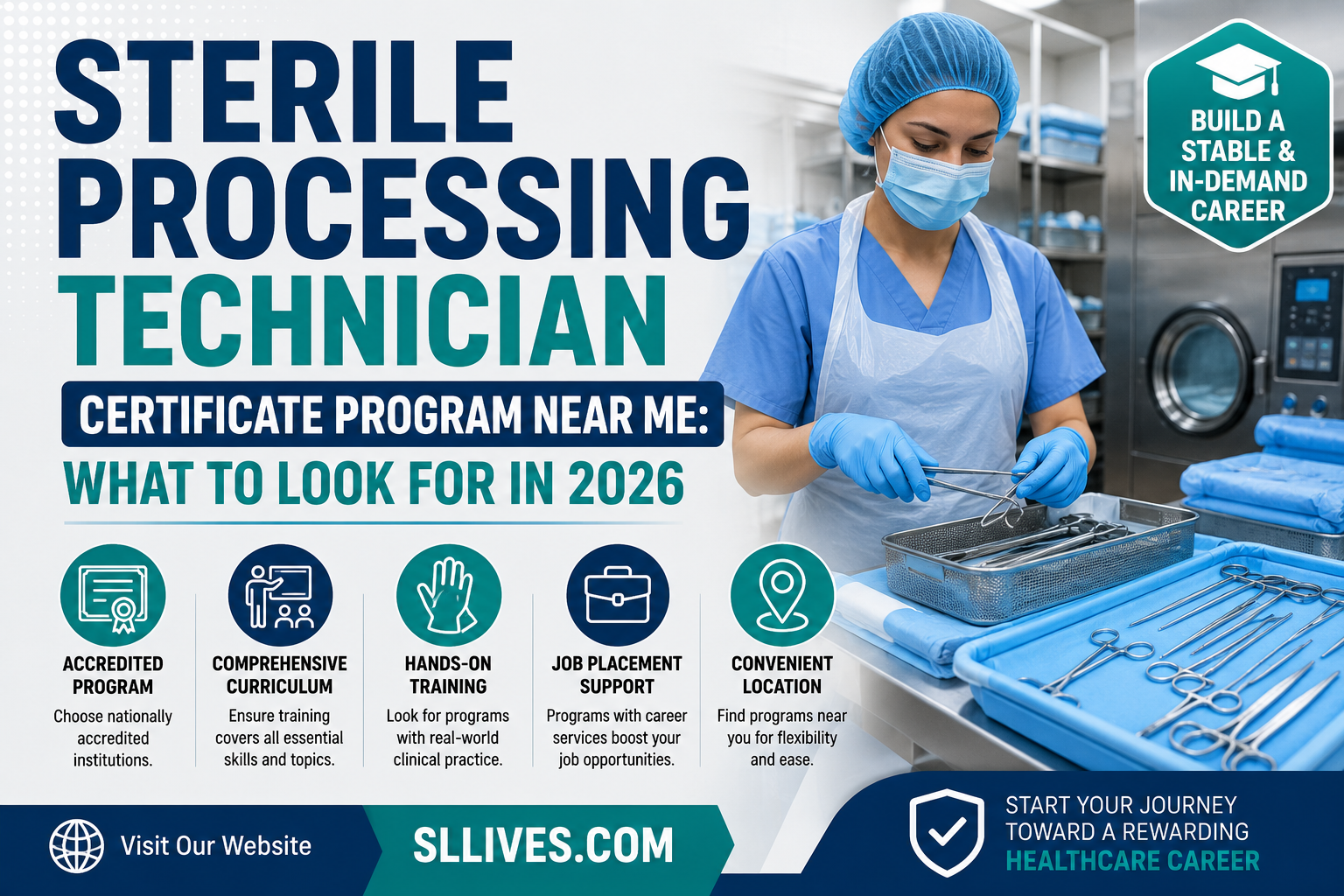
Searching for a sterile processing technician certificate program near me is often the first step toward a healthcare career. But once you start looking, you’ll quickly discover dozens of options: community colleges, private schools, hospital-based programs, online courses, and hybrid training.
The challenge is not finding a program. The challenge is choosing one that actually prepares you for certification and employment.
In this guide, we’ll explain what matters when comparing sterile processing programs, what employers look for, and why many students choose flexible online training instead of limiting themselves to programs in their immediate area.
What Is a Sterile Processing Technician Certificate Program?
A sterile processing technician certificate program teaches students how to safely clean, inspect, assemble, sterilize, document, and manage surgical instruments used in hospitals and surgery centers.
Most programs cover:
- Decontamination procedures
- Infection prevention
- Sterilization methods
- Instrument identification
- Surgical tray assembly
- Documentation and tracking systems
- Preparation for CRCST certification
The goal is to prepare students for entry into the sterile processing field and help them qualify for certification.
Do You Really Need a Program Near You?
Many people start by searching:
- sterile processing technician certificate program near me
- sterile processing classes near me
- sterile processing training near me
- sterile processing schools near me
While that seems logical, location is no longer the most important factor.
Today, many students complete training online and only travel when necessary for testing, externship opportunities, or employment.
The better question is:
Which program gives me the best chance of passing the certification exam and getting hired?
That answer is not always the closest school.
Types of Sterile Processing Programs
Community Colleges
Community colleges often offer healthcare certificate programs.
Advantages:
- Traditional classroom environment
- Access to campus resources
- Potential financial aid options
Disadvantages:
- Longer timelines
- Fixed schedules
- Commute requirements
- Additional textbook costs
Private Training Schools
Private healthcare schools may offer accelerated programs.
Advantages:
- Faster completion
- Career-focused training
Disadvantages:
- Higher tuition in some cases
- Varying quality between schools
Hospital-Based Programs
Some hospitals train technicians internally.
Advantages:
- Real healthcare environment
- Potential employment opportunities
Disadvantages:
- Limited availability
- Competitive admission
Online Training Programs
Online learning has become one of the most popular options.
Advantages:
- Flexible schedule
- Study from anywhere
- Faster completion
- Lower overall costs
For example, Multyprep’s 14-week live Zoom program allows students to prepare for CRCST certification without relocating or attending campus classes several times per week.
What Should a Good Program Include?
Not all programs provide the same value.
Before enrolling, ask what is actually included.
A quality program should provide:
- Structured curriculum
- Certification preparation
- Study materials
- Practice exams
- Instructor support
- Guidance during the application process
At Multyprep, students receive:
- 168-hour preparation course
- All study materials included
- 1000+ custom-made practice questions
- 2-week Exam Boost Workshop
- Assistance with exam applications
- Ongoing support until passing the exam
Those features can make a significant difference compared to programs that simply provide lectures and leave students to prepare independently.
Certification Matters More Than Location
Many employers focus less on where you studied and more on whether you are prepared for certification and the job itself.
In states such as New York, New Jersey, Connecticut, Pennsylvania, and Tennessee, certification plays a particularly important role.
That is why many students prioritize CRCST preparation over simply finding the nearest classroom.
If a program prepares you well for certification, it may provide more long-term value than a local option that offers limited support.
Career Support Can Make a Difference
One area students often overlook is career support.
Passing the exam is important.
Getting hired is the next step.
Some programs end their involvement once classes are finished.
Others continue supporting students throughout the employment process.
Multyprep offers additional career-focused services through advanced packages, including:
- Professional resume creation
- Interview preparation workshops
- Job search guidance
- Job application assistance
- Recommendation letter support
- One-on-one coaching
For students entering healthcare for the first time, that support can be just as valuable as the training itself.
Online vs In-Person Training
Both options can work.
The best choice depends on your schedule, location, and learning style.
Online Programs
Best for:
- Working adults
- Parents
- Career changers
- Students outside major cities
In-Person Programs
Best for:
- Students who prefer classroom learning
- People who want campus resources
- Those who learn better face-to-face
Many students choose online programs because they can continue working while preparing for certification.
How Long Does Training Take?
Program length varies.
Some programs take many months.
Others are designed to move students through preparation more quickly.
Many students prefer shorter programs because they can begin certification preparation sooner and enter the workforce faster.
Multyprep’s structured program is designed around a 14-week training timeline, allowing students to focus on certification readiness without spending years in school.
Questions to Ask Before Enrolling
Before choosing any sterile processing technician certificate program near me, ask:
- What is included in tuition?
- Are study materials included?
- Is certification preparation included?
- Are practice questions provided?
- What support is available before the exam?
- Is there help after training is completed?
- Are payment plans available?
- Is career support offered?
The answers often reveal the true value of a program.
FAQ
Can I complete sterile processing training online?
Yes. Many students successfully prepare for certification through structured online programs.
Do employers accept online training?
Employers primarily care about your knowledge, preparation, certification status, and ability to perform the job.
What certification should I pursue?
CRCST is one of the most recognized certifications in the sterile processing field.
How quickly can I start a healthcare career?
Many students begin certification preparation within weeks and complete training in a matter of months rather than years.
Do I need healthcare experience before enrolling?
No. Many students enter sterile processing from completely unrelated careers.
Final Thoughts
Searching for a sterile processing technician certificate program near me is a great starting point, but proximity alone should not determine your decision.
Instead, focus on what the program actually provides: certification preparation, study materials, instructor support, practice questions, and career guidance.
For many students, the best option is not necessarily the closest school—it is the program that helps them become exam-ready, job-ready, and confident in their future healthcare career.
If you’re exploring sterile processing as a career, Multyprep’s 14-week CRCST preparation program offers a structured path with training, study materials, practice questions, exam support, and career-focused resources designed to help students move forward with confidence.