

 By sl lives
Few criminal investigations in recent memory have stirred as much global debate as the case commonly known as the Epstein file. The story blends wealth power secrecy and tragedy in ways that feel almost fictional yet remain firmly rooted in reality. Over time, the case evolved from a local criminal investigation. It became a worldwide conversation about justice and privilege. It also highlighted the need to protect vulnerable people.
The name itself has become shorthand for a much larger issue. It represents not only one individual but also the systems that allowed alleged misconduct to remain hidden for years. Many readers approach the subject with a mix of curiosity disbelief and concern. How could such events unfold over such a long period without stronger intervention? That question continues to drive investigations and public debate.
Why the Story Captured Worldwide Attention
The story reached international prominence. It touched on themes that resonate across different cultures. Power imbalance and secrecy within elite social networks were central to the case. The vulnerability of young individuals formed its emotional core. When allegations first surfaced many observers assumed the matter would remain a regional legal issue. Instead it grew into a global news phenomenon.

Journalists across continents pursued the story. Advocacy groups demanded accountability. Survivors began speaking publicly about their experiences. Each development added another layer to an already complex narrative. The result was a sustained period of intense scrutiny unlike anything seen in comparable cases.
Media Coverage and Public Curiosity
Media outlets played a central role in the case. They transformed scattered allegations into a cohesive investigative narrative. Reporters gathered testimonies and reviewed legal filings. They also connected dots that had previously remained separate. As articles documentaries and investigative series emerged public awareness expanded rapidly.
Readers were not simply consuming headlines. Many were examining legal documents and investigative reports themselves. The internet accelerated this process turning the story into a continuous public investigation. Information circulated quickly and sometimes led to speculation. It also encouraged deeper examination of institutional responsibility.
Early Life and Rise to Influence
Understanding the case requires a brief look at the background of the central figure. He was born into modest circumstances. Later, he entered financial circles where reputation and connections often matter as much as capital. Over time he cultivated relationships with wealthy investors philanthropists academics and politicians. Those networks helped shape his image of influence. This influence extended far beyond traditional business circles.
Social Connections and Wealth Accumulation
Observers often note that wealth alone rarely creates social authority. Influence emerges when financial resources combine with access to powerful networks. Through strategic associations and philanthropic activities, he positioned himself as a prominent figure. He moved easily among elite gatherings. That visibility later raised questions about how influence may have affected legal scrutiny.
Entry into Elite Social Circles
Elite social spaces operate on trust reputation and exclusivity. Once admitted individuals often gain credibility that shields them from ordinary skepticism. Critics later argued that this environment allowed troubling behavior to remain hidden in plain sight. The combination of wealth, prestige, and perceived legitimacy created a protective social shield. This shield proved difficult to penetrate.
The Emergence of Allegations
The first major allegations surfaced quietly through local investigations rather than global headlines. Initial reports described claims of exploitation involving young individuals. At the time many observers expected the matter to conclude with routine legal proceedings. Instead the investigation expanded as additional individuals came forward with similar accounts.

First Reports and Investigations
Early investigative efforts faced significant obstacles. Witnesses hesitated to speak publicly due to fear embarrassment and legal complexity. Law enforcement agencies collected statements but struggled to coordinate across jurisdictions. The fragmented nature of the investigation slowed progress and contributed to ongoing controversy.
Legal Actions and Early Settlements
Legal settlements reached during the early phase of the case later became a focal point of criticism. Some analysts argued that the agreements limited further prosecution. Others claimed they reflected the complexities of gathering evidence. Regardless of interpretation, the settlements shaped public perception. They fueled suspicion that powerful individuals sometimes receive different treatment within legal systems.
The Expanding Investigation
As awareness increased new witnesses stepped forward and investigative journalists uncovered additional details. The case gradually transformed from a single criminal proceeding. It became a broader inquiry involving multiple jurisdictions and agencies. Each new disclosure intensified pressure on authorities to reopen or expand investigations.
Law Enforcement Challenges
Complex cases involving multiple locations often create logistical challenges. Evidence collection requires coordination among different legal systems each operating under distinct procedures. These difficulties sometimes delay prosecutions and complicate the pursuit of accountability. Critics argued that structural challenges are significant. However, they should never overshadow the urgency of protecting victims.
Testimonies from Survivors
Survivor testimonies became central to public understanding of the case. Many individuals described patterns of grooming and manipulation. They also shared how exploitation unfolded gradually over time. Their accounts offered insight into the psychological tactics often used in exploitation networks. Listening to these voices changed the tone of the conversation shifting it from speculation to human reality.
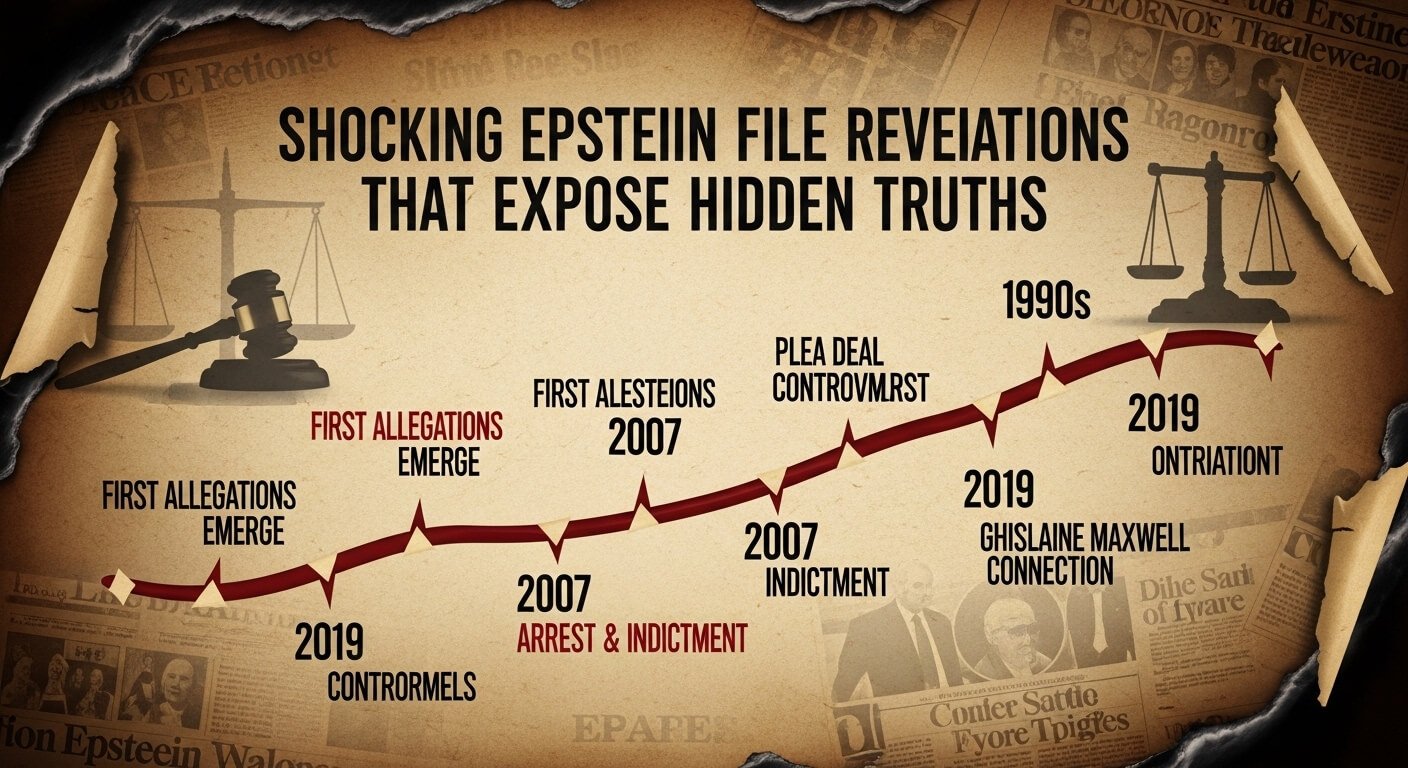
Timeline of Key Events
The unfolding timeline reflects a series of investigations and settlements. It also includes renewed scrutiny and major legal actions. Each stage reshaped public understanding. Early inquiries established the foundational allegations. Later developments introduced additional evidence and expanded the legal proceedings.
Early Investigative Milestones
Investigative milestones included the first formal charges, subsequent settlements, and later renewed inquiries. These inquiries were often prompted by investigative journalism. Each milestone revealed new aspects of the network. They also raised additional questions about oversight.
Arrests Court Proceedings and Legal Outcomes
Later arrests and court proceedings marked a turning point in public perception. Authorities showed a renewed willingness to pursue complex investigations. This applied even when influential individuals were involved. Legal outcomes varied, but the renewed proceedings reinforced an important principle. Allegations involving exploitation require persistent scrutiny, regardless of social status.
The Network Question
One of the most debated aspects of the Epstein File involves the possibility of broader networks. Observers have questioned whether the case involved isolated actions. They also wondered if a larger system of participants was involved. Investigators examined travel records communications and witness accounts seeking to clarify these issues.
Associates and Public Figures
Reports identified numerous associates ranging from business partners to social acquaintances. Not all associations implied wrongdoing. Yet the presence of high-profile connections fueled public fascination. Investigators faced a key challenge. They had to distinguish between casual social contact and meaningful involvement.
Debates Around Responsibility and Accountability
Public discussions frequently centered on accountability. Should responsibility extend only to individuals directly implicated in criminal acts? Or should institutions and enablers also face scrutiny? This debate continues to shape policy conversations about how societies address exploitation networks.
Institutional Failures and Legal Controversies
Many analysts believe the case exposed weaknesses in institutional systems. These systems are designed to protect vulnerable individuals. Critics argued that earlier intervention might have prevented further harm. Others emphasized the need for reforms. These reforms should ensure transparency in prosecutorial decisions and investigative processes.
Prosecutorial Decisions Under Scrutiny
Legal experts examined earlier prosecutorial agreements. They asked whether these agreements reflected strategic compromise or systemic failure. These discussions encouraged broader reflection on justice systems. They considered how to balance evidence challenges with the need to pursue serious allegations.
Questions of Justice and Fairness
The controversy sparked widespread reflection about fairness within legal systems. When wealth and influence intersect with criminal allegations public confidence can erode quickly. Restoring trust requires visible commitment to equal application of the law.
Public Reaction and Social Movements
Public reaction to the case extended far beyond courtroom proceedings. Advocacy groups organized campaigns. They called for stronger protections for minors and more robust investigative transparency. Survivors found greater support networks and platforms to share their experiences.
Impact on Conversations About Power Abuse
The case contributed to wider conversations about abuse of power in various sectors. These included entertainment, business, and politics. Many observers noted parallels between the case and broader social movements. These movements demand accountability for misconduct. These conversations encouraged institutions to reevaluate internal reporting mechanisms and safeguards.
Advocacy for Victims
Advocacy organizations emphasized survivor-centered approaches. They focused on counseling, legal assistance, and public awareness. Their efforts highlighted the long term emotional and psychological consequences of exploitation. By placing survivor experiences at the forefront, advocates reshaped the public narrative. They shifted the focus from scandal to human impact.
Media Investigations and Document Releases
Investigative journalism played a transformative role throughout the case. Reporters examined financial records interviewed witnesses and analyzed previously sealed documents. Each major report added depth to the public understanding of the events.
Role of Investigative Journalism
Journalists often operate as independent watchdogs especially in cases involving influential figures. Persistent reporting ensured that the story did not fade from public attention. Over time, these investigations encouraged authorities to revisit earlier decisions. They also prompted the pursuit of additional evidence.
The Significance of Newly Released Records
Document releases provided glimpses into communications, travel patterns, and financial transactions. Investigators considered these details relevant. While not all documents proved wrongdoing, they contributed to a broader mosaic of information. Researchers continue to analyze this information.
International Implications
The case carried international implications because the activities under investigation spanned multiple countries. Legal cooperation between jurisdictions became essential for evidence gathering and prosecution efforts. The global dimension highlighted the need for cross border frameworks addressing exploitation crimes.
Global Political and Legal Discussions
Policymakers in several countries referenced the case. They did this when discussing reforms related to trafficking laws and international cooperation. The situation demonstrated how crimes involving mobility and global networks require coordinated responses.
Influence on Policy Debates
Debates about transparency accountability and victim protection gained momentum in legislative bodies worldwide. Some governments proposed stronger reporting requirements while others explored expanded investigative powers. These policy discussions continue to evolve.
Psychological and Social Dimensions
The case had legal and political implications. It also revealed the psychological dynamics involved in grooming and exploitation. Experts explained that manipulation often relies on gradual trust-building and emotional dependency. Understanding these mechanisms helps communities recognize warning signs earlier.

Understanding Grooming and Exploitation
Grooming typically involves incremental steps that normalize inappropriate behavior over time. Victims may initially perceive interactions as harmless before realizing the extent of manipulation. Awareness campaigns now emphasize education aimed at families educators and community leaders.
Long Term Effects on Survivors
Survivors often face lasting psychological effects including anxiety depression and trust challenges. Support services such as counseling and legal assistance play a critical role in recovery. Many survivors who later spoke publicly described the importance of being heard and believed.
Lessons for Legal Systems
Legal scholars frequently cite the Epstein File as a case study illustrating the need for systemic reforms. Transparent procedures, independent oversight, and survivor-centered approaches remain key themes. These themes are central in ongoing reform discussions.
Transparency and Accountability Reforms
Transparency fosters public trust by demonstrating that investigations follow clear procedures. Accountability mechanisms ensure that decision makers remain subject to oversight. Together these reforms aim to strengthen institutional credibility.
Strengthening Protections for Vulnerable Groups
Protective policies must evolve continuously as exploitation methods change. Education improved reporting channels and specialized investigative units can enhance prevention efforts. The case underscores the importance of proactive rather than reactive strategies.
Continuing Investigations and Ongoing Questions
Even after major legal developments numerous questions remain. Civil lawsuits continue in various jurisdictions and investigators review additional evidence. Each new filing introduces potential insights. It also reminds observers that complex cases rarely conclude quickly.
Civil Lawsuits and Additional Claims
Civil proceedings allow survivors to seek compensation and recognition. This is possible even when criminal cases face evidentiary limitations. These lawsuits often reveal additional details. They contribute to the historical understanding of the events.
Unanswered Questions That Persist
Despite extensive investigations some uncertainties remain unresolved. Observers continue to ask whether all responsible parties have been identified. They also wonder if systemic reforms will prevent similar cases in the future. These unanswered questions sustain public interest.
The Cultural Legacy of the Case
Over time the case has become part of cultural discourse through books documentaries and academic research. These works attempt to synthesize the available evidence. They also examine broader themes of power, secrecy, and justice.

Representation in Documentaries and Books
Documentary filmmakers and authors strive to present survivor stories alongside investigative findings. Their work helps ensure that public memory goes beyond sensational headlines. It encourages deeper reflection.
Public Memory and Historical Reflection
Historical reflection often transforms individual cases into lessons for society. The legacy of the Epstein Filemay ultimately lie not only in legal outcomes but also in the reforms and awareness it inspires. Societies learn through confronting uncomfortable truths and adapting accordingly.
Frequently Asked Questions
What is meant by the Epstein file
The term generally refers to investigative records and legal documents. It also includes testimonies and related materials. These are connected to the broader case and its associated investigations.
Why did the case attract global attention
It involved allegations of exploitation linked to influential social networks. This raised concerns about accountability and institutional oversight across multiple countries.
Did the case lead to legal reforms
In several jurisdictions, policymakers cited the case. They discussed stronger protections for vulnerable individuals. They also focused on greater transparency in investigative procedures.
How did investigative journalism influence the outcome
Persistent reporting uncovered new evidence. It encouraged renewed investigations and kept public focus on unresolved questions.
Why does the case remain relevant today
Ongoing lawsuits and continuing document releases keep the case in the spotlight. Broader debates about power and accountability also maintain public attention. They ensure it continues to shape discussions about justice systems worldwide.
Conclusion
The Epstein file represents more than a criminal investigation. The case represents a complex intersection of power and influence. It also highlights institutional responsibility and human resilience. Years of investigative reporting, legal proceedings, and survivor advocacy followed. The case forced societies to examine how justice systems respond. This is especially true when allegations involve individuals with extraordinary social reach.
