
 By Qamer javed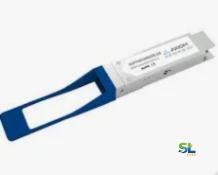
Introduction: The Fiber Infrastructure Dilemma
Network upgrades are a constant in the IT world, but they often come with a significant hidden cost: the physical layer. Replacing or augmenting fiber cabling infrastructure is expensive, disruptive, and time-consuming. The challenge for many organizations is to leap from 40G to 100G—or to deploy a mix of both—while fully leveraging their existing investment in duplex multimode fiber (MMF) plants. Enter the QSFP-40/100-SRBD, a highly versatile 100G BiDi bidirectional transceiver engineered specifically to solve this migration puzzle.
Technical Deep Dive: How SRBD Works
The “SRBD” acronym stands for Short Reach BiDirectional. This is the key differentiator. Unlike a standard 100GBASE-SR4 module that requires an 8-fiber MPO trunk, the QSFP-40/100-SRBD module operates over just two strands of standard LC-duplex multimode fiber (OM3 or OM4). It achieves this through bidirectional optics (BiDi) and wavelength-division multiplexing (WDM).
The module transmits data on one wavelength (e.g., 850nm) and receives on a different wavelength (e.g., 900nm) over the same single fiber. A matching module at the far end of the link does the exact opposite. This allows for full-duplex communication over a single fiber pair. Its second groundbreaking feature is native dual-rate capability. The module’s electronics and firmware are designed to automatically negotiate and operate as either a standard 40GBASE-SR4 transceiver or a 100GBASE-SR4 transceiver, depending on the capabilities of the host switch port. This is typically handled through a speed selection pin or auto-negotiation.
Strategic Benefits and Migration Scenarios
Maximizes Existing Fiber Investment: This is the paramount benefit. Organizations with extensive OM3/OM4 duplex LC cabling—installed for 1G, 10G, or even 40G via SWDM4—can immediately use that same infrastructure for 100G. This eliminates six-figure re-cabling projects.
Simplifies Network Evolution and Sparing: It allows for non-linear, “pay-as-you-grow” upgrades. A network core can be upgraded to 100G switches while the edge remains at 40G, all connected over the same fiber. For network operators, this dramatically simplifies sparing inventory, as one module type serves two generations of equipment.
Increases Fiber Capacity Without New Conduits: In scenarios where fiber conduits are at capacity, SRBD effectively doubles the bandwidth capacity of each existing duplex fiber pair, deferring the need for new fiber pulls.
Practical Deployment Applications
Phased Data Center Upgrades: Connecting new 100G spine switches to legacy 40G leaf switches over the existing fiber patch panel.
High-Density 100G over Duplex Fiber: Deploying new 100G links where using installed duplex LC fiber is simpler and cheaper than deploying new MPO trunks, especially in retrofitted or colocation spaces.
Flexible Interconnection in Mixed Environments: Ideal for enterprises, research labs, or service providers with heterogeneous equipment from different vendors and generations that need to interoperate seamlessly on a common fiber plant.
Disaster Recovery and Temporary Links: Provides a quick and flexible way to establish high-speed links using available duplex fiber strands in emergency or test scenarios.
Conclusion: The Smart Choice for Evolutionary Networks
The QSFP-40/100-SRBD module is a prime example of intelligent optical design addressing real-world business and operational challenges. It is not merely a transceiver but a strategic migration tool. By decoupling the logical network speed from the physical fiber topology, it provides network architects with unprecedented flexibility. It respects past investments while cleanly enabling the future, ensuring that the path to higher bandwidth is both timely and economically rational. For any organization facing the 40G-to-100G transition with a legacy duplex MMF infrastructure, the SRBD alternative is not just an option; it is often the most sensible and cost-effective strategy. Read More