
 By Alex John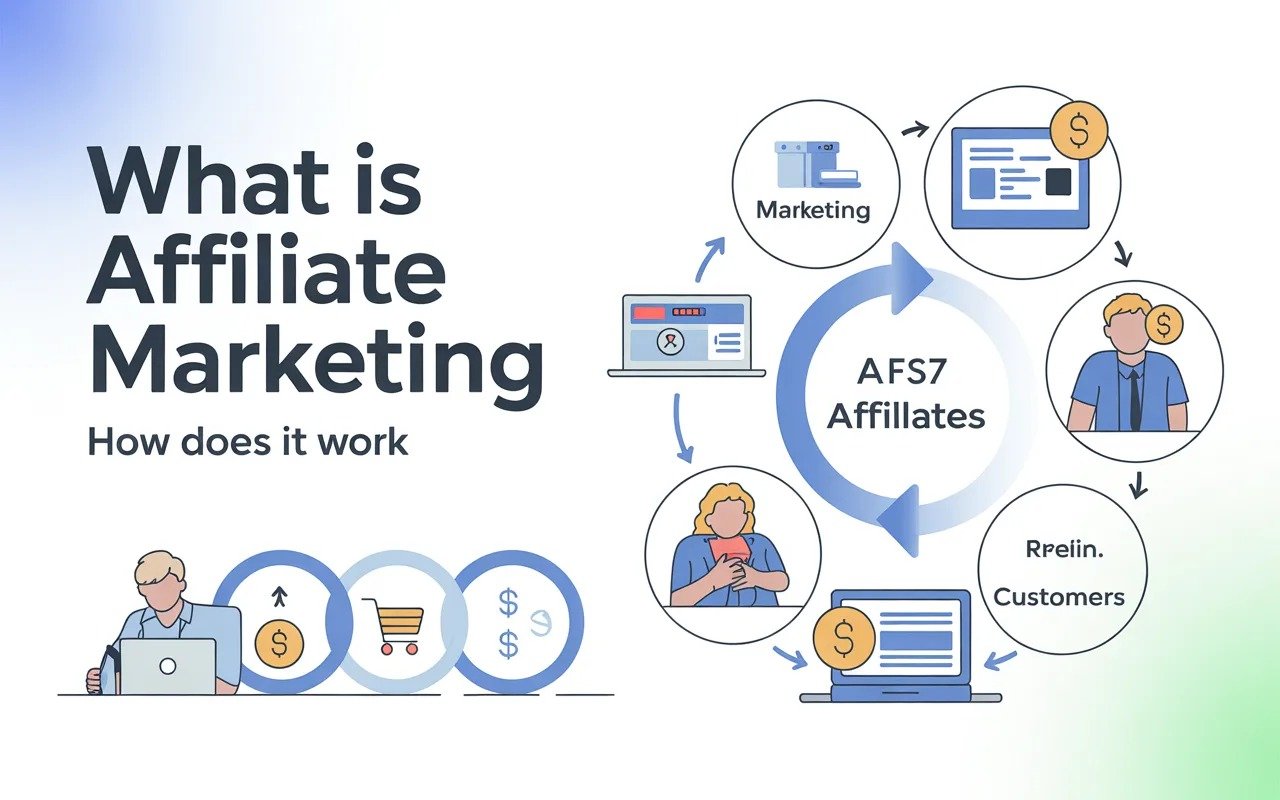
The digital economy has changed the way brands grow and earn profits. Few models work as well as affiliate marketing, which is why brands today are using affiliate marketing to grow. If a business wants to grow without spending a lot, then learning what is affiliate marketing and how does it work is essential. Affiliate marketing is more than a partnership between businesses and promoters; it works as a system that pays for results.
This blog will break down the core ideas of affiliate marketing, its benefits, what keeps it running, and more.
What Is Affiliate Marketing And How Does It Work?
Affiliate marketing works as an arrangement where brands pay affiliates only when the affiliates bring a sale, a lead, or traffic to the website. The brand does not pay any money up front for visibility alone; instead, it pays for measurable results only. Hence, businesses spend money on results achieved and goals met.
To understand what affiliate marketing is and how it works, think of affiliate marketing as a profit-sharing model:
- A brand makes an offer for a product.
- An affiliate promotes it using affiliate marketing channels.
- When a potential customer takes action, the affiliate gets a commission.
The model works smoothly because it benefits everyone. The brands get exposure without risk, and the affiliates earn income by creating content using influence or sharing expertise.
Benefits of Affiliate Marketing That Make It A Modern Essential
Brands and creators choose affiliate marketing because its advantages are undeniable. The benefits of affiliate marketing stretch across cost-efficiency, scalability, and operational simplicity. Some of the benefits of affiliate marketing are:
- Cost-effective growth- As businesses only pay for the results, it helps in the reduction of ad spend. Businesses do not have CPM or CPC costs.
- Low barrier to entry for affiliates- Creators and marketers can start straight away without inventory, capital, or customer service.
- Massive scale potential- Businesses can bring on thousands of affiliates, each bringing marketing strategies and more audiences.
- Performance transparency- Tracking links gives brands real-time insight into which affiliates and strategies generate revenue.
- Content leverage- Affiliate content like reviews, tutorials, and guides works over the term, bringing traffic and conversions.
It is due to these benefits that the affiliate marketing industry keeps growing, drawing businesses and experienced marketers.
Types of Affiliate Marketing
Picking the right type of affiliate marketing can change the course of your campaigns. Hence, it’s crucial to know the types of affiliate marketing to make the right choice. The common types of affiliate marketing include:
1. Unattached Affiliate Marketing
When the affiliate has no connection or skill linked with the product, and the affiliate relies heavily on paid advertising. Though the method is fast, the affiliate may need strategic marketing plans to succeed.
2. Related Affiliate Marketing
Such affiliates work in a niche that matches the product they’re recommending. For instance, a fitness blogger can promote protein supplements. These affiliates can capitalise on the trust and relevance of their audience, which ultimately lifts conversions.
3. Involved Affiliate Marketing
Involved affiliates use the product personally and recommend the product based on their personal experience. Such an approach is authentic, often making money.
Thus, understanding these affiliate marketing types lets both businesses and creators position themselves better.
Key Marketing Strategies For Successful Affiliate Campaigns
Successful affiliate marketers run campaigns like businesses. They rely on data-based marketing to not only raise conversion rates and expand audience reach but also to track numbers and adjust tactics as they go. Here are some ways to build the most effective affiliate marketing strategy:
- Niche positioning- Affiliates who specialise in niches like tech gadgets, finance, or wellness earn trust from their niche-specific audiences relatively better.
- High-quality content creation- Timeless content, such as blogs, tutorials, and comparison posts, brings traffic. Such content also lifts search rankings.
- Email automation- Affiliates build email lists and work with leads using the email lists. They share recommendations and grow recurring conversions.
- Social influence and video marketing- Short-form videos, YouTube breakdowns, and social media reviews help in fast product discovery.
- Data-driven optimization- Affiliates regularly test messaging, placement, creatives, and offers, improving efficiency over time.
Conclusion
Affiliate marketing is a marketing strategy and a model that embodies the core principles of partnership, mutual benefit, and trust.
In the modern marketing industry that’s dynamic, it is one of the few methodologies that ensures a true partnership between brands and affiliates. Therefore, understanding the affiliate marketing process, various forms of affiliate marketing, and effective marketing tactics can easily convert this model into a consistent revenue stream that sustains in the long-run.